Monday, July 30, 2007


There are no early warning signs or symptoms of prostate cancer. It usually grows very slowly, and due to its location, many men do not have any physical symptoms. However, if the prostate grows large enough, you may experience some symptoms.

Still, there are some symptoms, while not specific to prostate cancer, that should be reported to your physician for further study. These include urinary frequency and urgency, or obstructive urinary symptoms such as slowing of the urinary stream or difficulty emptying the bladder.

That's why many cases of prostate cancer aren't detected until it has spread beyond the prostate.

When signs and symptoms do occur, they may include the following:

  • Dull pain in your lower pelvic area
  • Urgency of urination
  • Difficulty starting urination
  • Pain during urination
  • Weak urine flow and dribbling
  • Intermittent urine flow
  • A sensation that your bladder doesn't empty
  • Frequent urination at night
  • Blood in your urine
  • Painful ejaculation
  • General pain in your lower back, hips or upper thighs
  • Loss of appetite and weight
  • Persistent bone pain

In fact, men who have a family history of prostate cancer are at least three times more likely to develop prostate cancer in their lifetime. If they have two or more relatives with prostate cancer, such as a brother, uncle or father, they are five times more likely to develop the disease, and if they have three or more relatives afflicted by prostate cancer, they are 11 times more likely to develop it themselves.

What causes prostate cancer and why some types behave differently are unknown. Research suggests that a combination of factors may play a role, including heredity, ethnicity, hormones, diet and the environment.

Diagnosed

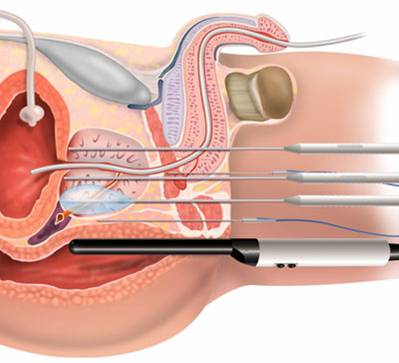
Prostate cancer is diagnosed from the results of a biopsy of the prostate gland. If the digital rectal exam of the prostate or the PSA blood test is abnormal, a prostate cancer is suspected. A biopsy of the prostate is usually then recommended. The biopsy is done from the rectum (trans-rectally) and is guided by ultrasound images of the area. A small piece of prostate tissue is withdrawn through a cutting needle. The TRUS-guided Tru-Cut biopsy is currently the standard method to diagnose prostate cancer. Classically a 6-core set is taken by sampling the base, apex and mid gland on each side of the gland. More cores may be sampled to increase the yield, especially in larger glands. A pathologist then examines the tissue under a microscope for signs of cancer in the cells of the tissue.

When prostate cancer is diagnosed on the biopsy tissue, the pathologist will then grade each of two pieces of the tissue from 1 to 5 on the Gleason scale. The scale is based on certain microscopic characteristics of the cancerous cells and reflects the aggressiveness of the tumor. The two scores are then added together. Sums of 2 to 4 are considered low, indicating a slowly growing tumor. Sums of 5 and 6 are intermediate, representing an intermediate degree of aggressiveness. Sums of 7 to 10 are considered high, signaling a rapidly growing tumor with the worst prognosis (outcome). Gleason scores can be helpful in guiding treatment that is based, at least in part, on the aggressiveness of the tumor.


Thursday, July 26, 2007


by BRETT SEAGROTT

If a man is experiencing recognizable prostate cancer symptoms, normally the disease has spread beyond the prostate gland. The deadliest, as well as most common cancer among men, prostate cancer only has a cure rate of only 20 to 30 percent.

One in six men will develop prostate cancer in his lifetime with the likelihood increasing as they age (two thirds of prostate cancers are diagnosed in men over the age of 65). Because of the slow development of prostate cancer symptoms, it is vitally important that men begin preventative health-care measures early in life - preferably starting in the early 30's. Among the key measures is a diet and sensible supplementation rich in clinically proven prostate and anti-cancer nutrients.

Prostate Cancer Symptoms

In order to have a better chance in fighting the disease, it is important to be aware of the symptoms associated with prostate cancer. The most common prostate cancer symptoms include a decrease in the size or force or an interrupted urine flow, painful or burning urination, frequent urination (especially at night) and blood in urine or semen. These symptoms are also associated with an enlarged prostate gland (BHP). In its advanced stages, these prostate cancer symptoms include frequent nagging pain in the hips, back, ribs, and pelvis. This is usually because the disease has spread to the bones in the pelvis or back.

Causes Of Prostate Cancer

While the exact causes of prostate cancer are not known, there are many risk factors that can add to the likelihood of contracting the disease. Genetics is believed to play a role because prostate cancer symptoms appear to run in some families. Having an immediate family member (father or brother) with prostate cancer more than doubles a man's risk of developing this disease. Diet and lifestyle can also play a role. Eating five or more servings of red meat and / or high fat diary products, in conjunction with substandard amounts of fruits and vegetables, have shown a link to prostate cancer.

Natural Prevention Methods

Without a clear understanding of the causes, it is hard to know how to prevent prostate cancer. However, since you have no influence over genetics, it is best to start with the factors you can control. Diet and nutrition are the first factors to consider when looking at natural cures for prostate cancer. Your diet should be based on a wide range of foods from plant sources, including, fruits and vegetables containing powerful phytonutrients, which often contain anti-cancer properties.

Research studies on phytonutrients have also shown success in preventing and relieving enlarged prostate (BPH) and prostate cancer symptoms. In addition, an anti-cancer diet comprised of brown rice, fresh raw fruits and raw vegetables will not only promote good health, it will give your body the building blocks it needs to fight prostate cancer and other diseases.

Supplements For Prostate Health

Most supplements designed for prostate health are comprised of several key herbs and nutrients. Since your diet is likely to have insufficient amounts of many of these nutrients you need to get them through a multi-nutrient supplement that balances the dose amounts and takes into account the synergistic reactions they have with one another.

The key players for prostate health are: • Beta Sitosterol • Turmeric • Corn Silk • Lycopene • Saw Palmetto • Zinc Citrate and Zinc Aspartate • Grape Seed • Quercetin • Omega 3 • Green Tea • Resveratrol (high potency) NOTE: Most supplements contain Zinc in the Citrate form which is good but it is crucial that additional Zinc is included in the Aspartate form because this travels directly to the prostate where it is needed!

To learn more about these prostate nutrients and how they specifically target different aspects of prostate health please follow this link: prostate cancer symptoms and prostate nutrients

Let’s Sum Up

As an older male, it is crucial to have a strong understanding of good prostate health as well as being able to recognize any and all possible prostate cancer symptoms.

Equally important for young men is to adopt preventative health-care measures early in life by eating responsibly, and investing in your long-term health with a quality, science-based nutritional supplement containing a high number of established anti-cancer nutrients. This must include all the key prostate nutrients listed above. (Less omega 3 which can be purchased separately in a soft gel).


Monday, July 16, 2007


There is clear evidence that the African American male is nearly twice as likely to develop prostate cancer compared to the white male. Indeed the highest rate of prostate cancer in the United States is found in African American men.

Additionally, African American men are also most likely to suffer from drug side effects from prostate cancer treatment than seen in white men such as incontinence. It has also been documented that African American men with prostate cancer are most likely to be dissatisfied with their doctor’s support compared to white men.

There are a number of reasons why the African American male community have a higher prevalence of prostate cancer disease. Researchers have suggested some of the following reasons for this:

* African American men's negative attitudes and distrust of the prostate cancer screening tests together with health care may contribute to the fact that when prostate cancer is diagnosed, it will be in the more advanced and inoperable stage in the African American men.

* They have limited or less access to health care and this is also believed to be a contributory factor. A large number do not have health insurance and this means that African American men do not always receive the preventative health care assessments that they require.

* Nutritional and environmental factors are also thought to play an important role. Although black men in Africa do have a high rate of prostate cancer, they do not appear to have as high a rate of prostate cancer compared to that of black men in the United States. It is also thought that lower levels of vitamin D and a difference in genetics may also contribute to higher rates of prostate cancer in African American men.

It is recommended that African American men aged over 40 years should undergo prostate cancer screening test on an annual basis. This screening should include a Prostate specific Antigen Blood test, commonly known as PSA. A Digital Rectal Examination or DRE should also be performed. This involves a gloved finger being inserted into the rectum to feel for any unusual growths on or around the prostate gland.

Those men who have prostate cancer in their family are at a greater risk of developing prostate cancer. It is advisable that African American men ascertain how many family members have suffered with prostate cancer before passing this information onto your doctor. Prostate cancer that is caught early provides men with greater chances of survival and living a normal life.

It is essential that African American men receive regular prostate health check-ups as these can save lives. Men should eat a healthy diet which includes ample fruit and vegetables. Exercise is also essential, although one should seek professional advice before embarking on an exercise regime. About The Author: Sharon Evans owns the prostate health website where you can get a most informative ebook that tells you all you need to know about prostate cancer. she also offers other great downloadable ebooks on a vast variety of health issues.


Friday, July 6, 2007


Author: Joe Bella

The prostate is a glandular organ present only in males. It surrounds the neck of bladder & the first part of urethra and condributes a secretion to the semen. The gland is conical in shape and measures 3 cm in vertical diameter and 4 cm in transverse diameter.It has got five lobes anterior, posterior, two lateral and a median lobe. Since the first part of the urethra pass through it any lesion in the prostate will produce difficulty in passing urine.

Some diseases of the prostate gland include the following:

1) Prostatitis:-

This is the inflamation of the prostate gland due to bacterial infection.

2) Benign enlargement of the prostate:-

This is a non cancerous tumour of the prostate seen after the age of 50. 3, Cancer of the prostate:-This is the 4th most common cause of death from malignant diseases in males.

Cancer of the prostate.

Cancer of the prostate is directly linked with the male sex hormones(androgens). If the levels of sex hormone increases the growth rate of cancer also increases. It is found that after the removel of testes there is marked reduction in the size of tumour.

Site of tumour:-

Prostate cancer is seen mainly in the posterior lobe. Non cancerous enlargement is seen in other lobes.

Changes in the gland in cancer:-

The gland becomes hard with irregular surface with loss of normal lobulation. Histologically prostate cancer is an adeno carcinoma(cancer of the epithelial cells in the gland)

Growth :-

Growth rate is very fast in prostate cancer. The tumour compresses the urethra and produce difficulty in urination.

Spread of tumour:-

Metastasis in cancer of prostate is very early.

1) Local spread:-

From the posterior lobe the cancer cells go to the lateral lobes and seminal vesicles. Tumour cells also move to the neck and base of the urinary bladder.

2) Lymphatic spread:-

Through the lymph vessels cancer cells reach the internal and external illiac group of lymph nodes. From there cells move to retroperitonial(Behind the peritonium) and mediastinal lymph nodes(in the chest)

3) Spread through the blood:-

Spread of cancer cells takeplace through the periprostatic venous plexus and reaches the vertebral veins while coughing and sneezing and finally enders the vertebral bodies of the lumbar vertebrae.

Signs and symptoms of prostate cancer:--

Signs and symptoms depend upon the stage of the cancer. The following symptoms may be seen.

1) No symptoms:-

Tumour is small and only in the posterior lobe. This is diagnosed accidentely.

2) Slight difficulty in urination:-

Here the tumour is enlarged and urethra is slightly compressed. Shortly there will be frequent urge for urination with difficult urination.

3) When the tumour spread to all nearby areas including neck of bladder and urethra there will be painful urination with bleeding.Urine comes drop by drop.

4) Retention of urine:-

When the urethra is completely compressed there will be retention of urine. This can lead to hydronephrosis, renal failure ect.In this condition patient may get convulsions due to renal failure and finally coma.

5) Signs of metastasis:-

Some patients come with the signs and symptoms of metastasis.

a) Lumbo sacral pain due to spread of cancer cells to lumbar and sacral vertebrae.

b) Fracture of spine due to cancerous growth in the spine.

c) Swelling, pain and fluid collection in the abdomen due to lesion in the abdomen.

d) Respiratory complaints due to cancer of mediastinal lymphnodes and lungs.

e) General weakness due to spread of cancer to different parts of the body.

f) Anaemia due to involment of bone marrow and increased destruction of RBCs.

Clinical examination :-

Includes per rectal examination to feel the prostate gland, palpation of abdomen to feel the swelling in kidneys and any tumours. Patient is examined from head to foot to find out any lesions.

Investigations:-

1) Complete blood investigations;-

RBC, WBC, Platlets, ESR, bleeding time , clotting time ect.

2) Urine analysis:-

Microscopic examination to detect pus cells, occult blood, casts, Crystals ect.

3) Renal function tests:-

Blood urea level, creatinine level, electrolyte level ect.

4) Serum acid phosphatase:-

Increased in cancer of prostate.

5) x-ray of the spine:-

To detect any tumour or fracture.

6) Ultra sonography;-

Gives idea about prostate, bladder, kidney ect.

7) C T scan:-

More detailed information about organs and tumour.

8) MRI of the spine:-

Gives detailed information about spine , disc and nearby soft tissues.

9) Lymphangiography:-

Gives idea about lymphatic spread of cancer.

10) Biopsy to confirm cancer:-

Biopsy is taken from the tumour and is send for histopathological examination under the microscope. This will detect the presence of cancer cells.

Treatment:-

1) If there is retention of urine catheterisation is needed.
2) Dialysis if kidney failure.
3) If there is coma monitoring of all vital functions along with parentral nutrition and electolyte supply.
4) Specific treatment is prostatectomy(removal of prostate)

Partial prostatectomy :-

Here only the affected lobe is removed.

Radical prostatectomy :-

Total removal of prostate along with nearby lymphnodes.

5, Hormone therapy :-

Stilbestrol is given to reduce tumour growth.Since this treatement increases the chance for cardiovascular disease phosphorylated diethyle stilbesterol is used nowadays.

6) Chemotherapy:-Drugs like cyclophosphamide, cisoplatim ect are given.

7) Radiotherapy is also done for some cases.

8) Homoeopathy:-

Homoeopathic drugs like carcinocin, conium, sabal, crotalus, thuja, iodum, selinium, staphysagria, sulphur ect can be given according to symptoms. Constitutional homoeopathic medicine will give great relief and can increase the life span.

Source: http://www.articlesbase.com/non-fiction-articles/prostate-symptoms-and-treatment-tips-43015.html

Monday, July 2, 2007


Author: Arturo

If you have been experiencing some strange sensations that you can ' t explain, you may be having an acid reflux disease symptom. This may be especially true if you are experiencing these things at night or after eating certain foods.

What is Acid Reflux?

Acid reflux disease is a condition where acidic gastric juices travel from the stomach back into your esophagus. There are those who experience acid reflux disease symptom regularly and there are those who experience acid reflux disease symptom only when they eat certain foods. Acid reflux disease is not a life threatening condition, but those who suffer with acid reflux disease symptom live with the discomfort and pain that this condition can bring.

Acid reflux disease can become more serious if your symptoms are not addressed, as the acid from your stomach can cause damage to the lining of your esophagus. There are many over the counter medications that a person can take that will address most acid reflux disease symptom you may have.

You may need to see a doctor if over the counter medication is not working for you. They will often prescribe a lifestyle change as well as stronger medication than what you can get over the counter. Many times a simple change in eating habits can alleviate an acid reflux disease symptom.

What is an Acid Reflux Disease Symptom?

For those who are unfamiliar with acid reflux disease symptom, they make include the most common of all symptoms; heartburn. Heartburn is an acid reflux disease symptom that sends many people running to the doctor. What heartburn is is a burning sensation that rises from your stomach into your throat. It can make swallowing difficult or painful. You may also experience an acid reflux symptom that includes hoarseness or dental erosion. You may even contract asthma from acid reflux disease because the acid from your digestive juices can make their way into not only your mouth and throat, but into the air passages of the lungs as well.

Don't hesitate to talk to a health care professional if you are experiencing any kind of acid reflux disease symptom. Once you get your signs and symptoms under control, you will increase the quality of your life.

Related Posts Plugin for WordPress, Blogger...
Twitter Delicious Facebook Digg Stumbleupon Favorites More