


The prostate is a gland in the male reproductive system located just below the bladder (the organ that collects and empties urine) and in front of the rectum (the lower part of the intestine). It is about the size of a walnut and surrounds part of the urethra (the tube that empties urine from the bladder). The prostate gland produces fluid that makes up part of the semen.

Experts from the UK specifically those based in the Cancer Research UK Cambridge Research Institute and the Institute of Cancer Research (ICR) are suggesting that the protein found in urine could be a concrete and strong indicator of the risk one has in terms of contracting prostate cancer.

A report from researchers indicates four genes identified appear to have a critical influence in determining whether the early stages of prostate cancer will develop into an aggressive and lethal disease.

Scientists have made a breakthrough in the battle against prostate cancer. They have pinpointed a protein that stops cancerous cells from growing and even drives them to kill themselves.
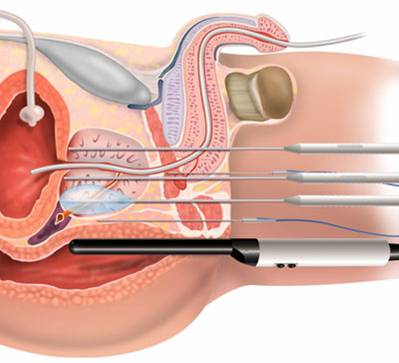
Please read through this section of our website to learn more about the prostate, prostate cancer, use our Prostate Cancer Assessement Tools, take the Risk Assessement Quiz and/or learn more about risk factors.
When somebody has attacked by the prostate cancer, his or her body will give some indicate like hard to streaming his or her urine, the stream of urine is weaker than normally, not be able to urine in all day, get up in the night to urinate frequently, and sometimes there are blood at her or his urinate or semen. These are called by prostate cancer symptoms.

Different types of treatment are available for patients with prostate cancer. Prostate Cancer treatmentSome treatments are standard (the currently used treatment),and some are being tested in clinical trials. A treatment clinical trial is a research study meant to help improve current treatments or obtain information on new treatments for patients with cancer.
Monday, August 20, 2007
By: Donald Saunders
Though there are various different tests which can be carried out when you suspect the possible presence of prostate cancer, the only certain way to diagnose the disease is the prostate biopsy. But precisely how successful is the biopsy when it comes to diagnosing this disease?
In the United States alone annually there are about one million prostate biopsy procedures carried out of which around 25 percent indicate the existence of cancer. Of the remaining 75 percent of biopsies however roughly 33 percent indicate false negative results. This means that about a quarter of those men undergoing a prostate biopsy are cleared by their biopsy, despite the fact that they actually have prostate cancer.
At first sight therefore it could seem that the biopsy is not a very good test but these results do not mean that there is anything wrong with the prostate biopsy procedure as a tool for diagnosing the presence of cancer. What it does mean however is the need to detect those patients who, in spite of they have returned a negative result, are nonetheless at considerable risk from cancer and ought therefore to undergo a second follow-up biopsy.
The problem is that until very recently there has not been an easy method of determining patients at risk. Fortunately, a recent study of more than five hundred men being investigated for the possible presence of prostate cancer might now provide an answer.
All of the men investigated in the study had already had a negative biopsy result but researchers discovered that when they studied the patient's prostate specific antigen (PSA) test results and these were adjusted to take account of the size of the prostate gland they could identify those patients who were more likely to produce positive results on a follow-up biopsy.
Additionally, the researchers found that patients who had a Gleeson score of 7 or above were at greater risk from life-threatening cancer and were once again more likely to record a positive result on a second biopsy. The Gleeson score runs on a scale between 2 and 10 and the score is derived from a microscopic investigation of biopsy tissue. Low scores show a cancer with a relatively small risk of spread while high scores show a cancer which is much more likely to spread.
There are various different biopsy procedures in use now but perhaps the most frequently performed procedure is known as the core needle biopsy. Here a number of very small tissue samples are removed from different areas of the prostrate gland using a biopsy gun which shoots a needle into the selected area and removes the sample within a fraction of a second. These samples are then sent off for laboratory analysis to ascertain whether or not cancer is present and, if so, to determine precisely how much of the prostate gland is affected.
The prostate biopsy is a costly procedure and is a test which can be quite nerve-racking for the patient. It can also be a fairly painful test which can be accompanied by bleeding and a risk of infection. For these reasons it is in everyone's interest to identify those men for whom a follow-up biopsy would be advisable and to reduce as far as possible the number of needless follow-up biopsies being carried out each year.
Source: http://www.ArticleBiz.com

Wednesday, August 15, 2007
Sunday, August 5, 2007
By: Donald Saunders
The PSA test is a blood test that is Often carried out as a screening test to detect the presence of a swollen prostate and of prostate cancer. Though the test cannot in itself be used for diagnosis it is a good indicator and, in combination with other tests, PSA test can point to the need for additional investigation.
The PSA test is usually recommended for men in high risk groups (like those with a family history of the condition) once they reach the age of about 40 to 45 and for men in general after they reach the age of 50.
A single PSA test in isolation will give a snapshot of prostate specific antigen levels in the blood and might indicate a problem immediately if you have particularly high psa numbers. However, in most cases, and when a prostate problem may be in its early stages of development, a single PSA test result will prove to be inconclusive and a further test will normally be suggested in a few weeks time. In fact, ideally PSA testing should be carried out at regular intervals 2 or 3 times each year so PSA levels may be viewed over time.
Provided that you have a normal PSA score then all is well, but when your PSA levels begin to rise they must be monitored closely. The speed at which PSA levels rise is normally called the 'PSA velocity' and providing the rise is steady and the velocity slow then it is once again frequently sufficient simply to watch the situation as numerous things can influence levels of PSA and seemingly increasing levels will frequently fall back to normal given time.
However, when PSA levels begin to increase rapidly and the velocity is said to be high then further investigation is certainly necessary.
This pattern of PSA testing and monitoring has been performed for some time but, although the test has always been considered to be a good indicator of the need for additional investigation, it was not until quite recently that we have been in a position to link specific PSA velocity to prostate cancer in a way that can indicate how aggressive prostate cancer is.
In a study conducted recently data concerning 950 men with prostate cancer who had undergone either surgery of radiation treatment at four hospitals between 1988 and 2004 was carefully scutinized.
In all cases each patient had been diagnosed with aggressive prostate cancer on the basis of an isolated very high PSA score, a noticeable rise in PSA velocity during the year before diagnosis, an advanced stage tumor, a biopsy showing signs of an aggressive cancer at cellular level or a combination of two or more of these signs.
This study also looked at the post-treatment outcomes for all of the patients and found that a rapidly increasing PSA level that rose by 2 points or more in a twelve month period was the best indicator or an aggressive cancer.
Up until now we have been able to connect increasing PSA levels with the possible presence of prostate cancer but it has been necessary to guess to a fair degree about whether or not such a cancer might be aggressive and require correspondingly aggressive treatment.
However, now we are able to say with reasonable certainty that where a PSA level rises by 2 or more points in a twelve month period then prostate cancer is almost certainly aggressive and requires speedy and vigorous treatment.
Source: http://www.ArticleBiz.com
Subscribe to:
Posts (Atom)


