


The prostate is a gland in the male reproductive system located just below the bladder (the organ that collects and empties urine) and in front of the rectum (the lower part of the intestine). It is about the size of a walnut and surrounds part of the urethra (the tube that empties urine from the bladder). The prostate gland produces fluid that makes up part of the semen.

Experts from the UK specifically those based in the Cancer Research UK Cambridge Research Institute and the Institute of Cancer Research (ICR) are suggesting that the protein found in urine could be a concrete and strong indicator of the risk one has in terms of contracting prostate cancer.

A report from researchers indicates four genes identified appear to have a critical influence in determining whether the early stages of prostate cancer will develop into an aggressive and lethal disease.

Scientists have made a breakthrough in the battle against prostate cancer. They have pinpointed a protein that stops cancerous cells from growing and even drives them to kill themselves.
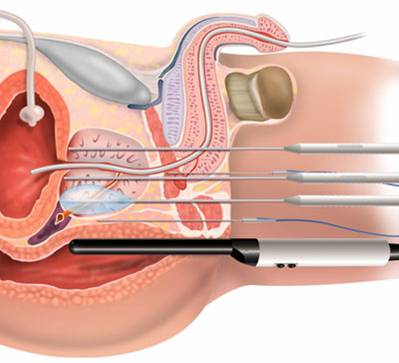
Please read through this section of our website to learn more about the prostate, prostate cancer, use our Prostate Cancer Assessement Tools, take the Risk Assessement Quiz and/or learn more about risk factors.
When somebody has attacked by the prostate cancer, his or her body will give some indicate like hard to streaming his or her urine, the stream of urine is weaker than normally, not be able to urine in all day, get up in the night to urinate frequently, and sometimes there are blood at her or his urinate or semen. These are called by prostate cancer symptoms.

Different types of treatment are available for patients with prostate cancer. Prostate Cancer treatmentSome treatments are standard (the currently used treatment),and some are being tested in clinical trials. A treatment clinical trial is a research study meant to help improve current treatments or obtain information on new treatments for patients with cancer.
Wednesday, September 26, 2007
By: Varina Andrews
There are numerous treatments for prostate cancer and each has its own benefits and drawbacks. Patients and their prostate specialist must weigh many factors when determining the best treatment option. Age, Gleason score (measure of aggressiveness), PSA, lifestyle and quality of life issues all play a very important part in the equation of finding the optimal treatment. HIFU treatment, which is short for High Intensity Focused Ultrasound, is a state-of-the-art technology acoustic ablation technique that utilizes the power of ultrasound to destroy deep-seated tissue with pinpoint accuracy for treatment of prostate cancer. HIFU focuses sound waves in a targeted area which rapidly increases the temperature in the focal zone causing tissue destruction.
The control and precision of HIFU treatment reduces the risk of common side effects such as impotence and incontinence.
HIFU is a 1-3 hour, one-time procedure preformed on an out-patient basis under spinal or epidural anesthesia. Unlike radiation, HIFU is non-ionizing so it can be repeated if necessary without damaging healthy tissue. This means that HIFU can also be used as a salvage technique if other prostate cancer treatments fail.
HIFU Treatment Information
An overview of what patients may expect during each phase of HIFU treatment - should you have any specific questions regarding treatment, please visit www.drlotenfoe.com.
Before HIFU Treatment The night before your HIFU procedure, you will be given two enemas that are administered 2 hours prior to the procedure. It is very important that you do not move during the HIFU procedure, therefore, after arriving at the treatment facility, you will be given an epidural (spinal) anesthesia that will numb you from the waist down. You will also be given light intravenous sedation.
During HIFU Treatment The patient experiences no pain during treatment. A small probe that emits ultrasound waves directly to the prostatic tissue, is inserted into the rectum. First, the prostate specialist captures real-time images of the prostate and the surrounding area. Treatment time varies depending on the size of the prostate, but generally lasts one to three hours. You may experience swelling in the abdomen as a result of the destruction of tissue, therefore a catheter is inserted and is typically worn for 2-3 weeks to make sure that the bladder can empty properly as your body heals. Most patients are able to resume a normal diet and lifestyle almost immediately. No hospital stay is required and the procedure involves no incision and no scalpel.
After HIFU Treatment Immediately after HIFU there is a one to two hour recovery period at the treatment facility and then you are discharged to recover comfortably at your hotel. Your prostate specialist will prescribe some antibiotics and other medications for after HIFU, but most people don’t experience any pain after the procedure. You may experience some discomfort or body aches which is normal and is temporary. Additionally, in the first one to two weeks after HIFU, you may experience very mild urinary symptoms such as frequency and/or urgency to void (the compelling urge to urinate, along with discomfort in your bladder), which are also normal and temporary.
Source: http://www.ArticleBiz.com

Sunday, September 16, 2007
By: Donald Saunders
A lot of men will experience some type of prostate problem with nearly half of all men having benign prostatic hyperplasia (a swollen or enlarged prostate gland) by the time they reach the age of 60 and about ninety percent getting the problem before they reach 80.
Benign prostatic hyperplasia is a benign or non-cancerous swelling of the prostate gland and can normally be treated using drugs or with minor minimally invasive surgery. The first step however is to ensure that the problem is benign prostatic hyperplasia and that the symptoms are not being caused by another problem, such as difficulties with the kidneys or bladder or an infection of the urinary tract.
At the same time as checking for a swollen prostate gland it is imperative to also check for the presence of prostate cancer as, despite the fact that a swollen prostate gland does not produce prostate cancer, it is possible for a swollen prostate gland and prostate cancer to exist alongside each other.
Testing normally involves a prostate exam, or digital rectal exam, along with an assessment of the patient's symptoms and medical history. As the prostate gland lies between the rectum and the bladder it is an easy matter for a doctor or nurse to put a gloved and lubricated finger into the rectum while the patient lies on his side to examine the prostate gland for signs of swelling or irregularities. A prostate exam is not perhaps the most agreeable experience but is more embarrassing than painful.
It is also feasible for you to do your own prostate exam or for your partner to carry this out for you. Indeed, a growing number of men find that this reasonably simple examination may be done quite easily once a month or so while having a shower. This examination provides considerable peace of mind and can also allow any enlargement to be found at a very early stage so that it can be treated.
Your doctor may also order a number of laboratory tests at this point. These tests may include a blood test to check PSA levels, blood urea nitrogen and creatinine together with a urine test.
PSA is found in the blood and is produced by the prostate gland with levels increasing a bit in response to benign prostatic hyperplasia and quite markedly in the case of prostate cancer.
The other tests are designed to look for the existence of an infection of the urinary tract or difficulties with the kidneys, both of which can lead to symptoms which are similar to the symptoms experienced in cases of a swollen prostate.
In some cases the doctor may also order additional tests such as an ultrasound examination to determine the size of the prostate gland and measure the volume of urine in the bladder, or a cystoscopy (an exam making use of a thin and flexible scope) to evaluate the condition of the urethra and bladder.
When none of these tests produce clear results a doctor may order a prostate biopsy in which a number of tiny samples of tissue are taken from the prostate gland for microscopic examination.
Source: http://www.ArticleBiz.com
Thursday, September 6, 2007
By: Varna Andrews
Cancer is a frightening word. But prostate cancer doesn’t mean the end.
There is a breakthrough that is giving men diagnosed with prostate cancer their lives back, and next to painlessly!
When I was diagnosed with Prostate cancer in 2002, I honestly felt that my world was rapidly coming to an end. Fortunately, I discovered HIFU. My roommate at the Indiana University Hospital had undergone a standard prostatectomy two days before me…and was in considerable pain…while I was walking laps around the perimeter of the 6th floor within four hours of regaining consciousness! My progress has been steadily upward ever since. Thank you for giving me my life back!"
Norman
West Chester, Ohio
What is HIFU treatment?
HIFU treatment, which is short for High Intensity Focused Ultrasound, is a state-of-the-art technology acoustic ablation technique that utilizes the power of ultrasound to destroy deep-seated tissue with pinpoint accuracy for treatment of prostate cancer. HIFU focuses sound waves in a targeted area which rapidly increases the temperature in the focal zone causing tissue destruction.
The control and precision of HIFU treatment reduces the risk of common side effects such as impotence and incontinence.
HIFU is a 1-3 hour, one-time procedure preformed on an out-patient basis under spinal or epidural anesthesia. Unlike radiation, HIFU is non-ionizing so it can be repeated if necessary without damaging healthy tissue! This means that HIFU can also be used as a salvage technique if other prostate cancer treatments fail.
What is the HIFU treatment like?
It is very important that you do not move during the HIFU procedure, therefore, after arriving at the treatment facility, you will be given an epidural anesthesia that will numb you from the waist down. You will also be given light intravenous sedation.
During HIFU treatment, the prostate specialist uses continuously updated real-time images of the prostate to map out and execute the entire treatment plan. These images show treatment progression and permit the prostate specialist to customize treatment for maximum safety and effectiveness.
The patient experiences no pain during treatment! A small probe that emits ultrasound waves directly to the prostatic tissue is inserted into the rectum. First, the prostate specialist captures real-time images of the prostate and the surrounding area. Treatment time varies depending on the size of the prostate, but generally lasts one to three hours. You may experience swelling in the abdomen as a result of the destruction of tissue, therefore a catheter is inserted and is typically worn for 2-3 weeks to make sure that the bladder can empty properly as your body heals. Most patients are able to resume a normal diet and lifestyle almost immediately! No hospital stay is required and the procedure involves no incision and no scalpel.
Immediately after HIFU there is a one to two hour recovery period at the treatment facility and then you are discharged to recover comfortably at your hotel. Your prostate specialist will prescribe some antibiotics and other medications for after HIFU, but most people don’t experience any pain after the procedure. You may experience some discomfort or body aches which is normal and is temporary. Additionally, in the first one to two weeks after HIFU, you may experience very mild urinary symptoms such as frequency and/or urgency to void, which are also normal and temporary.
What are the benefits of HIFU?
•HIFU is "clean" energy; there is no radiation exposure to the patient, so there is no risk for weakening or damaging of cells and tissue surrounding the prostate.
•HIFU is non-surgical; therefore there is minimal blood loss and it is less invasive than other treatments for Prostate cancer.
•HIFU treatment is preformed under spinal anesthesia, thus eliminating risk associated with general anesthesia.
•It is an out-patient procedure; no overnight hospital stay is required.
•HIFU can be repeated, if necessary.
•After HIFU treatment, if needed, patients may pursue other treatment options.
•HIFU can be used as a salvage treatment for local prostate cancer recurrence.
• Studies show that HIFU preserves patient quality of life by minimizing side effects such as impotence and incontinence.
for more information, visit www.drlotenfoe.com
Source: http://www.ArticleBiz.com
Sunday, September 2, 2007
By: Matt Murren
Even though the prostate is notoriously difficult to remove, there are some things you can do beforehand to speed up recovery after prostate cancer surgery. Over the years, doctors have come to recommend these preparations more and more. If your doctor does not discuss these things with you, it is still important to ask about them.
For many years, meditation has been considered the arena of quacks and charlatans. Nevertheless, new studies reveal that the ability to relax plays a crucial role in speeding up recovery after prostate cancer surgery. In addition, patients that learn to focus also develop the ability to manage their pain more effectively. This is especially important in assisting with recovery after prostate cancer, as well as from the procedure itself.
Along with fears of the blood banks harboring contaminated blood, there is also an overall growing shortage of blood available for transfusion. As small and unimportant as the prostate is in the overall scheme of things, a great deal of blood may be lost during the surgery. If you have two pints of blood drawn prior to the procedure, you will effectively be donating to yourself. This will make it much easier for your body to adapt to the new blood, and thus speed up recovery after prostate cancer surgery.
As may be expected, your health condition prior to undergoing surgery will either help or hinder your recovery after prostate cancer surgery. While you may not have enough time to take up weight lifting and high impact aerobics; Pilates exercises, Tai Chi, and walking can all boost your sense of well being, as well as speed up your recovery after prostate cancer surgery. In addition, before surgery, it is also important to eat foods that will supply your body with the proteins and other nutrients that will help you heal faster. You may want to check with your doctor to learn about which foods will work best.
It may also be helpful to you to understand what side effects you will have to contend with during your recovery after prostate cancer surgery. As an example, the last thing you want to do is wind up with constipation, and not have stool softeners available. Since urinary incontinence is often a part of recovery after prostate cancer surgery, you will also want to get some undergarments and pads designed to manage this effectively. By having an open and frank discussion with your doctor about this, and other concerns, you will be able to purchase whatever supplied and medications you need before the surgery. This will help you have peace of mind, as well as reduce stress after you get home from the hospital.
Today, doctors are becoming more aware that their treatments occur at a specific point in time. This time point is not at all divorced from all that goes on beforehand. Thus, pre-surgical preparations are becoming a vital aspect of determining speed and completeness of recovery after prostate cancer surgery. If your doctor does not initiate a discussion about these things, you may want bring them up on your own.
Source: http://www.ArticleBiz.com
Subscribe to:
Posts (Atom)


