


The prostate is a gland in the male reproductive system located just below the bladder (the organ that collects and empties urine) and in front of the rectum (the lower part of the intestine). It is about the size of a walnut and surrounds part of the urethra (the tube that empties urine from the bladder). The prostate gland produces fluid that makes up part of the semen.

Experts from the UK specifically those based in the Cancer Research UK Cambridge Research Institute and the Institute of Cancer Research (ICR) are suggesting that the protein found in urine could be a concrete and strong indicator of the risk one has in terms of contracting prostate cancer.

A report from researchers indicates four genes identified appear to have a critical influence in determining whether the early stages of prostate cancer will develop into an aggressive and lethal disease.

Scientists have made a breakthrough in the battle against prostate cancer. They have pinpointed a protein that stops cancerous cells from growing and even drives them to kill themselves.
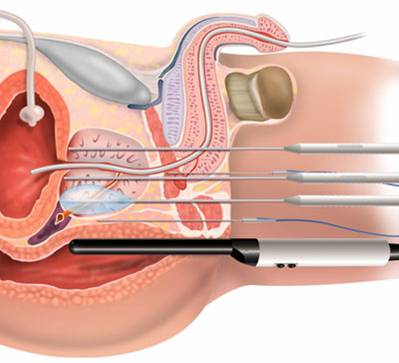
Please read through this section of our website to learn more about the prostate, prostate cancer, use our Prostate Cancer Assessement Tools, take the Risk Assessement Quiz and/or learn more about risk factors.
When somebody has attacked by the prostate cancer, his or her body will give some indicate like hard to streaming his or her urine, the stream of urine is weaker than normally, not be able to urine in all day, get up in the night to urinate frequently, and sometimes there are blood at her or his urinate or semen. These are called by prostate cancer symptoms.

Different types of treatment are available for patients with prostate cancer. Prostate Cancer treatmentSome treatments are standard (the currently used treatment),and some are being tested in clinical trials. A treatment clinical trial is a research study meant to help improve current treatments or obtain information on new treatments for patients with cancer.
Wednesday, December 26, 2007
By: Lena Butler
A guide on how to prevent, detect and survive prostate cancer.
Prostate cancer claims its turf silently. The tumor grows in the prostate gland discreetly without any obvious symptoms until an advanced stage of growth is reached. The symptoms that do show up at this stage are too mellow to be associated with something as serious as cancer, and men usually ignore them attributing them simply to signs of advancing age.
Any man will get Prostate Cancer if he lives long enough. How come? 70% of all men above 90 have a tumor of some kind in his prostate gland. Nobody is immune to this deadly cancer. The only means of protection is to know it in and out and to detect it early on.
Billions have been spent on researching Prostate Cancer and none of that has resulted in a solid conclusion as to how it is caused although some factors that influence its formation have been identified conclusively. For instance, the age of a person affects the probability of cancer considerably. The older you are the higher is your chance of having prostate cancer. Men of African-American descent are genetically predisposed towards prostate cancer, and so are men who habitually consume a diet rich in fat and predictably so.
It is quite possible to detect prostate cancer before it reaches an advanced stage through one of the various tests that are available. The most rudimentary of them all is the rectal analysis which is conducted to determine whether there is an enlargement of the prostate gland. The DRE, as it is referred to, is the ingenuous process of inserting a gloved and lubricated finger into the back passage to actually feel the prostate gland to determine its size. Ultrasound test, a more refined version of this test, is performed by inserting an ultrasound probe instead of the customary finger of the rectal analysis. Another noteworthy procedure that joins this league is the biopsy where small cylindrical tissue cores are extracted from the prostate gland itself by the use of a probe with a special spring loaded needle. These samples are then analyzed under a microscope to detect instances of cancerous growth.
Although these tests sound macabre and intimidating, there is a blood test that could determine Prostate Cancer. The PSA test (Prostate Specific Antigen test) is performed by extracting a blood sample from the patient and analyzing this sample for abnormally high levels of a particular antigen produced in the prostate gland, high levels of which are a telltale sign of Prostate Cancer.
When prostate cancer is detected early on, there is a very high probability of achieving a complete cure without a possibility of recurrence. Early detection of Prostate Cancer is the key to a successful cure since for a case where the tumor growth has advanced to the bones; even surgery simply fails to cut it, literally.
Source: http://www.ArticleBiz.com

Thursday, December 6, 2007
by: Rudy Silva
By age of 50, most men will already have an enlarged prostate and three of these men will have cancer cells forming in their prostate. Prostate cancer is the main cancer found in men and by age 75 three out of four men will have prostate cancer.
The facts are pretty clear, if you are a male you will have to deal with BPH, enlarged prostate, or prostate cancer.
So how do you know if you have BPH or prostate cancer? Well, here are a few of the symptoms:
" getting up at night to urinate
" having difficulty urinating
" not completely emptying your bladder
" having pain during sex
" having pain when urinating
Medical test that you can get for enlarged prostate or prostate cancer.
" PSA, prostate specific antigen, which gives a good indication of your prostate health
" PAP, prostate acid phosphatase, a test that is more accurate than PSA, but many doctors don't use it or are unfamiliar with it.
" Sonogram is a safe and accurate way to check your prostate
" MRI, magnetic resonance imaging, is also accurate but is the most expensive test.
There is other tests that doctors like to make and that is,
Biopsy of the prostate - Don't have it done. It's very harmful to the prostate and should never be done.
The ideal way to take care of prostate health issues is to change or improve you diet and lifestyle. Here are some area that you need to look at to make changes.
" diet
" supplement
" fasting
" hormone balancing
" eliminate addictive substances - smoking, alcohol, coffee, non-herbal tea)
" exercise
" stress, anxiety, and emotional issues
The first thing you need to do is start using a supplement that will start to heal your prostate condition. Then you need to change your diet. Here I will tell which supplement to buy immediately and in another article I will outline a good diet to follow.
Go out and immediately but a supplement that contains Beta-sitosterol. You will find beta-sitosterol in saw palmetto and pygeum africanum, but these herbal plants have very little beta-sitosterol. This make them useless for prostate health. You need 325 to 610 mg per day and these herbal products 30 mg or less.
A good beta-sitosterol to buy is the NSI Phytosterol Complex with Beta-sitosterol -- 240 Tablets. This is only $20.00 plus shipping.
You will find this product contains the following ingredients:
Betasitosterol
Stigmasterol
Campesterol
Brassicasterol
All of these chemicals are called Phytosterol, which are consider the fat inside a plant. These sterols have an anti-inflammatory property and help to buildup your immune system. They have been found effective in reducing the inflammation of the prostate, BPH, lowering cholesterol, and aiding in many other illnesses.
Take the first step in keeping a health prostate and avoid having to deal with enlarged prostate or prostate cancer. Look for more of my articles on prostate health.
Source: http://www.articlecity.com/
Sunday, December 2, 2007
by Brian A. Stone
Medical experts, such as Dr. Brian A. Stone, say African-American men are exceedingly vulnerable to prostate cancer, but that symptoms usually associated with the disease can also be associated with other conditions.
Just in case you didn't know, prostate cancer remains the most commonly diagnosed cancer in American men. Over 200,000 cases are diagnosed and almost 30,000 men die from this disease annually. The bad news is that men of African descent in America die from prostate cancer three times the rate of Caucasians. Prostate cancer is typically a silent invader. The majority of cases are detected based on an abnormal blood test called PSA (prostate specific antigen). The normal range for PSA in a man between 40 and 60 years of age is 0 to 2.5. When this test is elevated, the diagnosis of prostate cancer is made based on a biopsy of the gland. Some patients with prostate cancer develop problems with urination--frequency, waking at night to urinate, a weak flow, severe urgency, hesitation of flow, incomplete emptying, deviated stream and difficulty postponing urination.
The good news is that there are other non-cancerous conditions that can affect the prostate and cause the same symptoms as prostate cancer. The prostate gland is a small, chestnut shaped organ, found only in the male. It is located beneath the bladder and acts as a conduit through which urine flows. The prostate is a part of the urethra, which is the tube that passes from the bladder to the penis. Conditions that affect the urethra can also cause symptoms that can be seen in prostate cancer.
Source: http://findarticles.com/
Subscribe to:
Posts (Atom)


